


 Plan your trip
Introduction
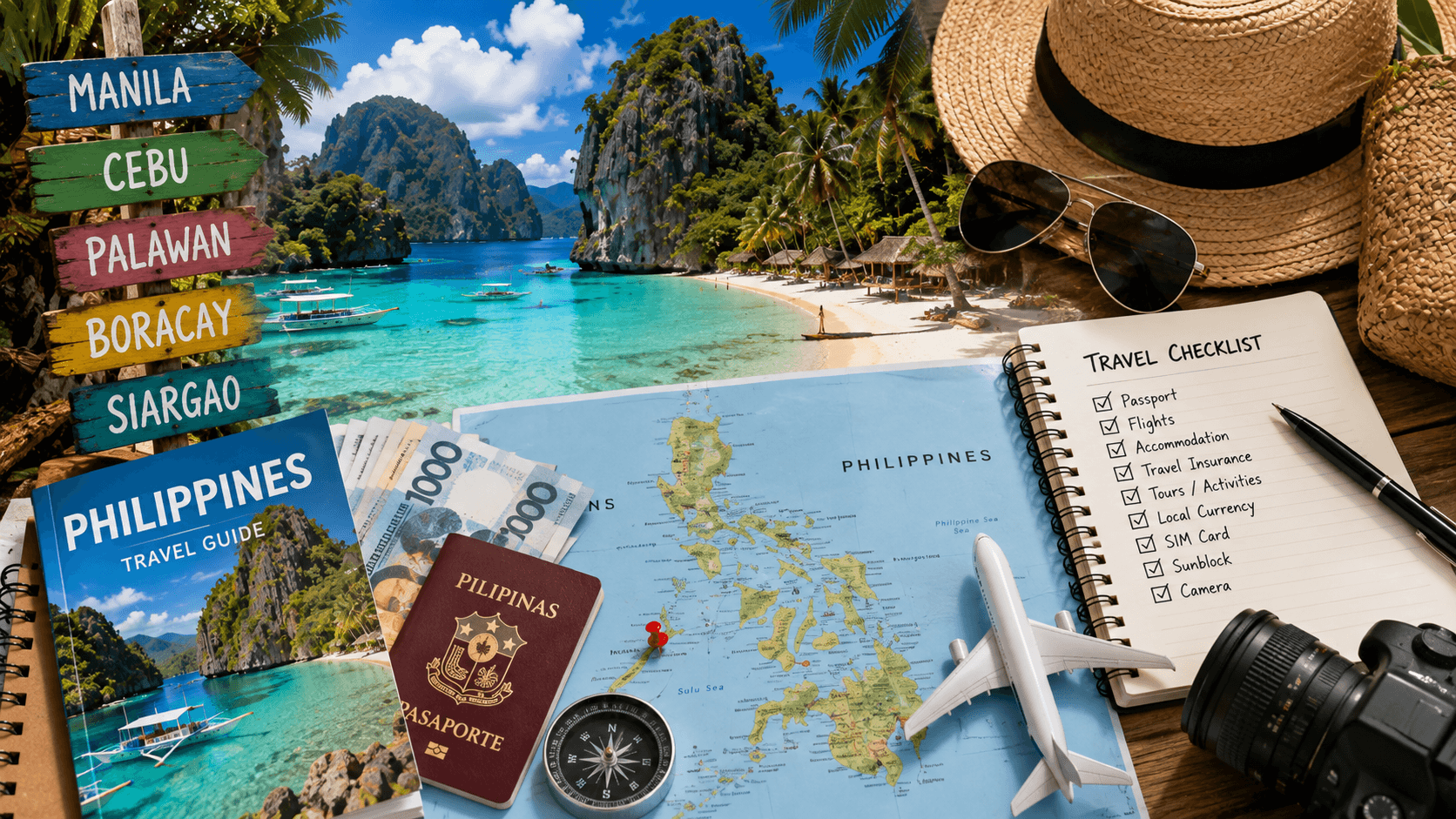
The Philippines consists of 7,641 islands, offering some of the most diverse marine ecosystems and clean white-sand beaches on earth. To navigate this massive archipelago without stress, consulting a Complete Philippines Travel Planning Guide for First-Time Visitors is key to having a smooth tropical vacation.
Moving across this vast country demands careful preparation regarding local flights, seasonal weather shifts, and regional customs.
Understanding the Archipelago’s Geography
The country is divided into three main island groups: Luzon in the north, the Visayas in the center, and Mindanao in the south. Each region offers distinct landscapes, from the towering rice terraces of the north to the clear lagoons of the central and southern islands.
What to Expect on Your First Visit
First-time travelers will experience immense hospitality, lively street life, and stunning natural beauty. However, local infrastructure varies greatly between big cities and remote islands, making pre-trip planning highly useful.
Key Logistics and Weather Patterns
The tropical climate of the Philippines features two distinct seasons that heavily impact travel plans. When preparing your schedule, referencing a Complete Philippines Travel Planning Guide for First-Time Visitors helps you align your arrival with the best weather windows.
Dry Season vs. Wet Season
The dry season runs from November to April, making this period the ideal window for beach activities and island hopping. The wet season spans from May to October, bringing heavy rainfall and potential storms that can disrupt travel schedules.
Managing Typhoon Risks
Typhoon activity peaks between July and October, often causing sudden cancellations of flights and ferry crossings. Planning around these seasonal transitions guarantees a safer and more predictable plan.
This approach allows you to secure lower rates during the shoulder months of May or October while avoiding major storms.
| Season | Months | Travel Recommendation |
|---|---|---|
| Dry Season | November to April | Best for island hopping and outdoor activities. |
| Wet Season | May to October | Lower prices but higher risk of rain and storms. |
Complete Philippines Travel Planning Guide for First-Time Visitors: Transit Tips
Navigating local transportation can be challenging due to the variety of ferries, tricycles, and jeepneys. This Complete Philippines Travel Planning Guide for First-Time Visitors simplifies transit by explaining how to book domestic flights and ferry tickets in advance.
Essential Packing and Preparation
Packing light is highly recommended because of the frequent transfers between small planes and boats. Consulting a Complete Philippines Travel Planning Guide for First-Time Visitors ensures you pack breathable clothing, reef-safe sunscreen, and dry bags for island excursions.
You should also prepare cash in local currency, as many remote islands do not have reliable ATMs. Having a Complete Philippines Travel Planning Guide for First-Time Visitors handy helps you identify which destinations require cash upfront.
Budgeting for Your Trip
Daily expenses in the country can vary wildly depending on your travel style and chosen destinations. Utilizing a Complete Philippines Travel Planning Guide for First-Time Visitors allows you to estimate costs for accommodation, food, and activities accurately.
By planning your expenses ahead of time, you can enjoy premium island tours without overspending. This Complete Philippines Travel Planning Guide for First-Time Visitors is designed to help you maximize your budget while experiencing the best of the islands.


Comments are closed