



 Philippines Calender
The Philippines consists of more than seven thousand tropical islands. Each province hosts lively local celebrations deeply rooted in ancient traditions and community bonds. Plotting an unforgettable trip across these islands requires a reliable Philippines Festival Calendar: Best Events Throughout the Year.
This detailed guide breaks down the most famous cultural celebrations. It maps out exact timelines, locations, and historical contexts to help you organize a perfect route. Let this schedule simplify your travel logistics.
Filipino festivals, known locally as fiestas, merge native customs with Spanish colonial influences. Expect high-energy street dances, intricate costumes, and long banquet tables welcoming perfect strangers. Following the regional flow of these events ensures a deeply engaging travel experience.
The First Quarter: Street Dances and Sacred Devotions
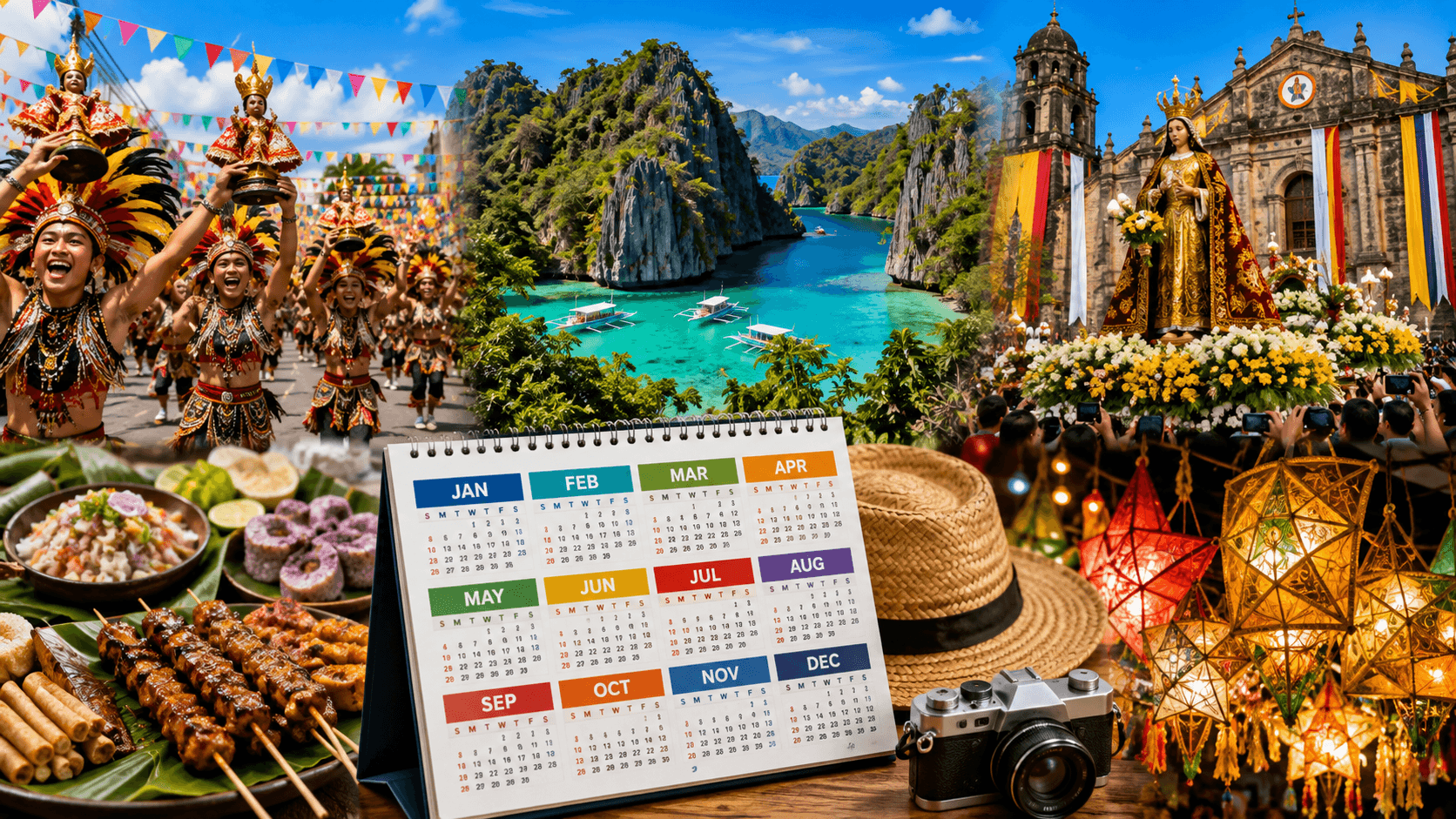
January kicks off the fiesta season with incredible momentum, especially across the Visayas. The Sinulog Festival in Cebu City and the Ati-Atihan Festival in Kalibo, Aklan, both take place during the third week of January to honor the Santo Niño. This dynamic start to the cultural cycle remains a crucial component of any Philippines Festival Calendar: Best Events Throughout the Year.
These early-year spectacles are famous for thunderous drum beats, dancers smeared in dark soot, and miles of street parades. Right after these finishes, the Dinagyang Festival in Iloilo City occupies the streets on the fourth Sunday of January. Dinagyang stands out for its highly athletic, intensely theatrical dance dramas.
Anyone attending these massive gatherings should prepare for packed streets and slow movement. Success during these early-year feasts relies on smart preparation. Consider these basic logistics before heading out.
- Book your hotel rooms in Cebu City or Iloilo City at least six months ahead of time.
- Wear breathable clothing and sturdy, closed-toe shoes made for walking miles in packed crowds.
- Bring water bottles and keep your valuables locked in front-facing bags.
The Second Quarter: Abundant Harvests and Floral Tributes
As summer heat peaks in May, local feasts focus on farm harvests and patron saints. The Pahiyas Festival in Lucban, Quezon, held every May 15, turns a quiet town into a bright canvas of folk art. Locals cover their houses in colorful kiping, which are thin, leaf-shaped rice wafers, alongside fresh vegetables.
Travelers seeking unique agricultural celebrations often consult the Philippines Festival Calendar: Best Events Throughout the Year to witness these elaborate decorations. The feast honors San Isidro Labrador, the patron saint of farmers, to secure next year’s crop. Visitors can sample local foods like savory Lucban sausage from street-side grills along the route.
May also brings the nationwide Flores de Mayo, a month-long tribute to the Virgin Mary featuring fresh flowers. The grand finale is the Santacruzan, a beautiful pageant representing Queen Helena’s search for the Holy Cross. Prominent locals wear elaborate, tailor-made gowns while walking under arches decorated with flowers.
Why You Need a Reliable Philippines Festival Guide
Visiting an archipelago of thousands of islands during fiesta season is tricky without advanced planning. Keeping a structured Philippines Festival Calendar: Best Events Throughout the Year helps you coordinate flights and local ferries without losing days. Moving between islands during peak dates requires smart routing due to heavy domestic travel traffic.
Booking ferry tickets and local flights early prevents major delays in your schedule. Respecting local customs is vital when participating in these historic events. Many rituals hold deep religious meaning, so you must dress modestly when stepping into historic churches.
Greeting residents politely during neighborhood feasts makes the travel experience far richer. Most locals love sharing their food and stories with respectful visitors.
Summary of Major Philippine Festivals
To help you plan your route, we put together a quick-reference overview. This table serves as a snapshot of the primary entries in our Philippines Festival Calendar: Best Events Throughout the Year.
| Festival Name | Location | Month | Key Highlight |
|---|---|---|---|
| Sinulog Festival | Cebu City | January | Grand street parade and traditional prayer-dance |
| Ati-Atihan Festival | Kalibo, Aklan | January | Soot-smeared dancers and tribal drumming |
| Pahiyas Festival | Lucban, Quezon | May | Houses decorated with colorful rice wafers (kiping) |
| MassKara Festival | Bacolod City | October | Smiling masks and lively street dancing |
| Giant Lantern Festival | San Fernando, Pampanga | December | Massive, synchronized light displays |
The Second Half of the Year: Smiles, Masks, and Giant Lanterns
October brings the MassKara Festival in Bacolod, famous as the City of Smiles. This event began during a severe economic crisis in 1980 to lift local spirits. Dancers wear bright, smiling masks covered in beads and feathers while performing to fast Latin rhythms.
Integrating these late-season highlights into your personal Philippines Festival Calendar: Best Events Throughout the Year requires booking accommodations months in advance. The atmosphere in Bacolod during mid-to-late October is electric. Street food markets line the roads, serving up charcoal-grilled chicken inasal.
December wraps up the calendar year with the Giant Lantern Festival in San Fernando, Pampanga. Known as the Christmas Capital of the country, San Fernando hosts this massive competition on the Saturday before Christmas Eve. Local villages build giant lanterns measuring up to twenty feet across, using manual rotors to flash light bulbs in time with festive brass bands.
This huge display of light remains one of the final major entries on the annual Philippines Festival Calendar: Best Events Throughout the Year. The clever engineering required to flash thousands of bulbs draws massive crowds. People travel from all over to witness the glowing patterns in the night sky.
Managing your trip during these late-year events goes smoother with some local knowledge. Here are a few practical tips to keep in mind.
- Taste the unique local food in each town, like sweet pastries in Bacolod and pork dishes in Pampanga.
- Arrive at the lantern arena by mid-afternoon to secure a good viewing spot before the crowds arrive.
- Prepare for cooler night winds in Luzon during December by packing light jackets or sweaters.
Essential Cultural Etiquette for Festival Attendees
Joining these local celebrations is a privilege that requires respectful behavior. Always ask before taking close-up photos of dancers in their costumes. Staying behind the security ropes keeps both performers and spectators safe.
Keeping the streets clean is another vital duty for tourists. Carrying a reusable flask and using trash cans helps towns handle the huge piles of garbage. Keeping these traditions alive relies on the shared care of both visitors and hosts.
Conclusion: Planning Your Festive Journey
Joining a local fiesta offers a real look into the country’s heart, history, and deep-seated friendships. Consulting a complete Philippines Festival Calendar: Best Events Throughout the Year helps you see the finest parts of local culture and hospitality.
With early planning and respect for local ways, you will build lasting memories. Lock in your flights early, pack your sense of adventure, and get ready to experience the true warmth of the Filipino people.


Comments are closed